
Drive-Up Access Storage: Who It's For and How To Make the Most of It
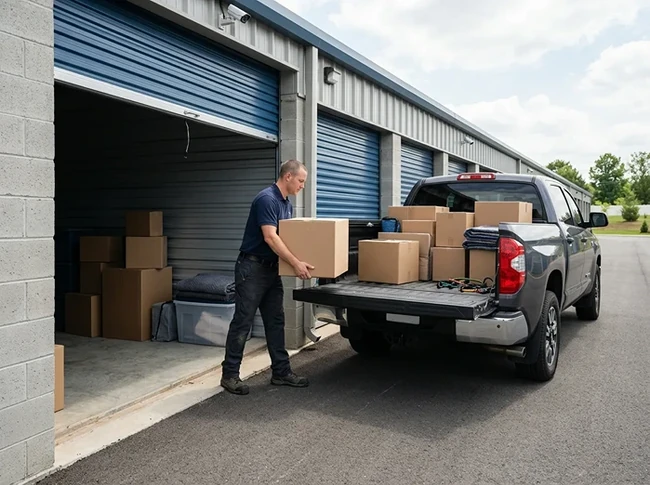
You've got a delivery to make by noon, a second stop across town by two, and a restocking run penciled in for Friday. Every extra minute spent hauling inventory through a hallway or waiting for an elevator is a minute that doesn't exist in that schedule. Drive-up access storage was built for exactly this kind of operational rhythm, and for owner-operators who run on tight turnarounds, it changes how a storage unit actually functions in the business. Find the drive-up space that fits your needs with Advantage Self Storage.
What Drive-Up Access Storage Actually Means
When you rent a drive-up storage unit, your unit door opens directly to a paved drive lane, so you pull your vehicle alongside it, load or unload, and leave. There's no cart to track down, no corridor to navigate with a furniture dolly, and no shared elevator to wait on. For businesses that access their unit multiple times a week, that frictionless entry and exit turn into real time savings over a month. It's a different type of space than an interior unit, and it's worth understanding the distinction before renting. Interior units often work well for items that stay put for months at a time. Drive-up units are built for frequent access, heavy loads, and the kind of in-and-out traffic that would make an interior hallway impractical.
The Business Case: Inventory and Seasonal Stock
Small business owners and independent operators have quietly made drive-up storage a core part of their logistics setup. Landscapers, contractors, event vendors, and product-based retailers all share a common problem when their inventory fluctuates seasonally. When that happens, the primary workspace, whether a garage, a van, or a small commercial suite, can't absorb the overflow.
A drive-up unit handles the overflow without the overhead of a warehouse lease. Seasonal stock, whether that's patio furniture going into rotation in spring or holiday fixtures coming out of storage in October, can be staged and pulled in batches rather than crammed into a workspace. The unit becomes a satellite inventory point, not just a holding area.
For businesses that track inventory carefully, this kind of setup also supports better stock rotation. Items that need to move first sit at the front of the unit. Slower-moving products or offseason equipment go to the back. That physical organization, possible because you can drive right up and rearrange without wrestling things through a narrow hallway, gives you the advantages of a warehouse at a fraction of the cost. Our inventory management tips for small business owners go deeper on this if you're building out a system.
Equipment Storage: Tools, Ladders, and Fixtures
Heavy equipment is where drive-up access really shines. Loading a 10-foot ladder into a storage unit indoors requires a hand truck, and in a corridor, that can be tricky or even impossible. Loading that same ladder from a truck bed directly into a drive-up unit is a one-person task that takes under a minute.
Contractors, tradespeople, and field service operators often store a rotating set of tools and fixtures in a unit near their most active job sites. A drive-up unit near a project area functions almost like a job-site trailer, minus the permit requirements and the cost of moving it. Power tools, pipe sections, sample products for client presentations, display fixtures, and bulk fasteners all fit this model well. The unit stays organized because loading and unloading is easy enough that there's no temptation to just throw things in and sort it out later.
Advantage Self Storage offers business storage options designed around exactly this kind of operational use. If you're running multiple job sites or managing a rotating equipment inventory, it's worth looking at what's available across our storage locations to find a facility close to where you're working.
Same-Day Order Fulfillment and Last-Mile Pickup
E-commerce operators and local delivery businesses have found a practical use case that most people don't associate with self storage by using a drive-up unit as a fulfillment staging point. Orders get packed, labeled, and staged in the unit. The driver pulls up, loads the day's deliveries directly from the unit into the vehicle, and leaves. No warehouse, no loading dock, no shared receiving area.
This works particularly well for businesses that fulfill orders regionally and need a pickup point that's closer to their delivery zone than their home base. A unit near a key delivery corridor cuts drive time at the start of every route. For the logistics behind this kind of setup, our post on self storage as a last-mile delivery hub covers all the operational details.
Furniture, Appliances, and Bulky Items
Beyond the business use cases, drive-up access is simply the right format for anything large and heavy. Furniture, appliances, large power equipment, and oversized fixtures are genuinely difficult to move through an interior facility. A drive-up unit lets you back a truck or trailer directly to the door, slide items straight in, and close up without a complicated relay of carts and corridors.
For businesses that deal in furniture resale, appliance refurbishment, or staging services, this is a practical necessity. Pieces come in and go out on a rolling basis, and the ability to load and unload quickly is what keeps the operation moving. A unit that's hard to access quickly becomes a unit that's poorly organized, and a poorly organized unit costs time on every visit.

Month-to-Month Leasing and Operational Flexibility
One of the underappreciated advantages of pairing drive-up access with a month-to-month lease is that your storage footprint can match your actual workload. A landscaping company might need a larger unit from March through October and scale back in the offseason. A contractor finishing a big project might not need the unit at all once the job wraps. Month-to-month terms mean you're not locked into capacity you don't need.
This flexibility matters more for businesses making frequent trips than it does for someone storing furniture long-term. When a unit is part of your weekly operations, the lease structure is part of the cost model. Locking into a long-term contract on a unit you might not need year-round adds unnecessary overhead.
Choosing the Right Unit Size for Operational Storage
Getting the unit size right is worth some thought before you rent. A unit that's too small creates a problem on every visit. A unit that's too large means you're paying for floor space that's sitting empty. For most equipment-heavy operations, a unit in the 10x20 or 10x30 range gives enough room to stage items in a working order rather than stacking everything floor to ceiling.
If you're not sure where to start, Advantage Self Storage's unit size guide breaks down the options clearly. Picking the right footprint from the start saves the hassle of upsizing mid-lease when your inventory grows.
Drive-up access storage works best when it's treated as an operational asset rather than a passive holding space. For owner-operators who run on tight schedules and need a unit they can access quickly, load efficiently, and leave without friction, it's one of the more practical tools available. The key is matching the unit size and location to your actual workflow, then building your restocking and delivery runs around it consistently. Reserve your storage space at an Advantage Self Storage facility near you today.